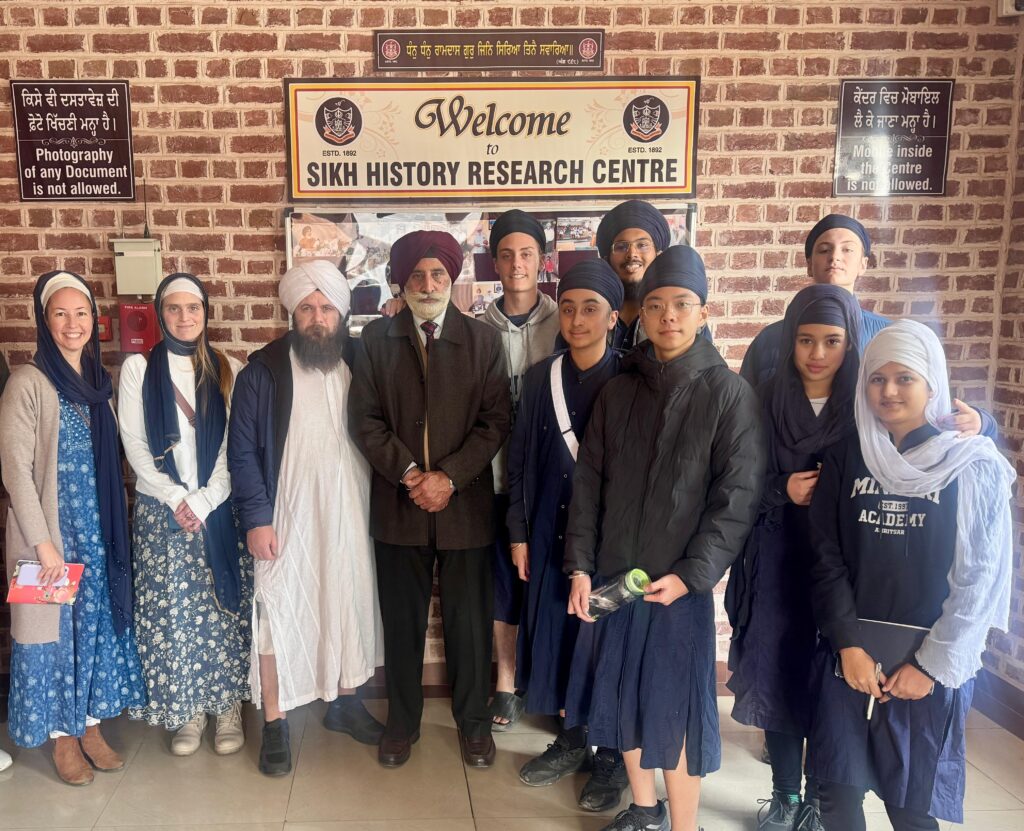

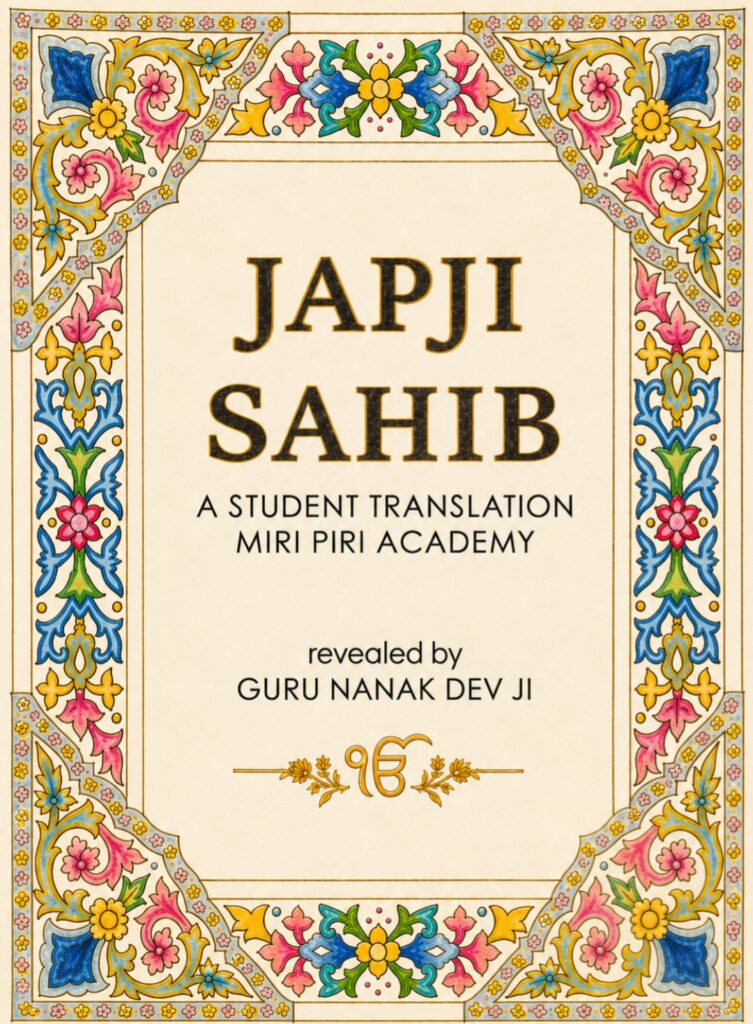
Over the second half of the school year, the second- and third-year students at Miri Piri Academy undertook a slow and demanding project: creating a student translation and commentary of the first five pauris of Japji Sahib.
Led by Dharambir Kaur, the Japji Sahib Student Translation Project invited students to move beyond simply reading or reciting Guru Nanak Dev Ji’s foundational bani. Instead, students engaged with the difficult process of analyzing, interpreting, discussing, and redesigning the text from the ground up.
Language, Interpretation, and Translation
The work combined language study, philosophy, reflective interpretation, visual design, and collaborative discussion. Over several months, students worked through layered Punjabi vocabulary, unfamiliar grammar, and spiritual poetry while gradually building their own understanding of the text.
The process proved far more challenging than many students initially expected. Students repeatedly revised translations, compared interpretations, explored sentence structure, and discovered how small grammatical changes could significantly affect meaning. Rather than producing fully independent scholarly translations, the project helped students recognize how complex and careful the process of translation actually is, and how difficult it can be to communicate spiritual language clearly without oversimplifying it.
Using structured worksheets and interpretive resources, students explored different approaches to Japji Sahib while also learning that some meanings become clearer only through repetition, discussion, and reflection over time.
Reflection and Discussion
Alongside the analytical work, students also had a session with Ravijit Kaur, who helped them explore a more personal relationship with Japji Sahib and reflected on questions that emerged throughout the process.
As the project developed, students gradually shifted from simply trying to “find the right answer” toward reflecting more personally on themes such as ego, Hukam, desire, effort, and self-understanding. The depth of understanding naturally varied from student to student, but many developed a more thoughtful relationship with the bani through the process of wrestling with its meanings rather than simply receiving fixed answers.
Sikh Manuscript Traditions and Design
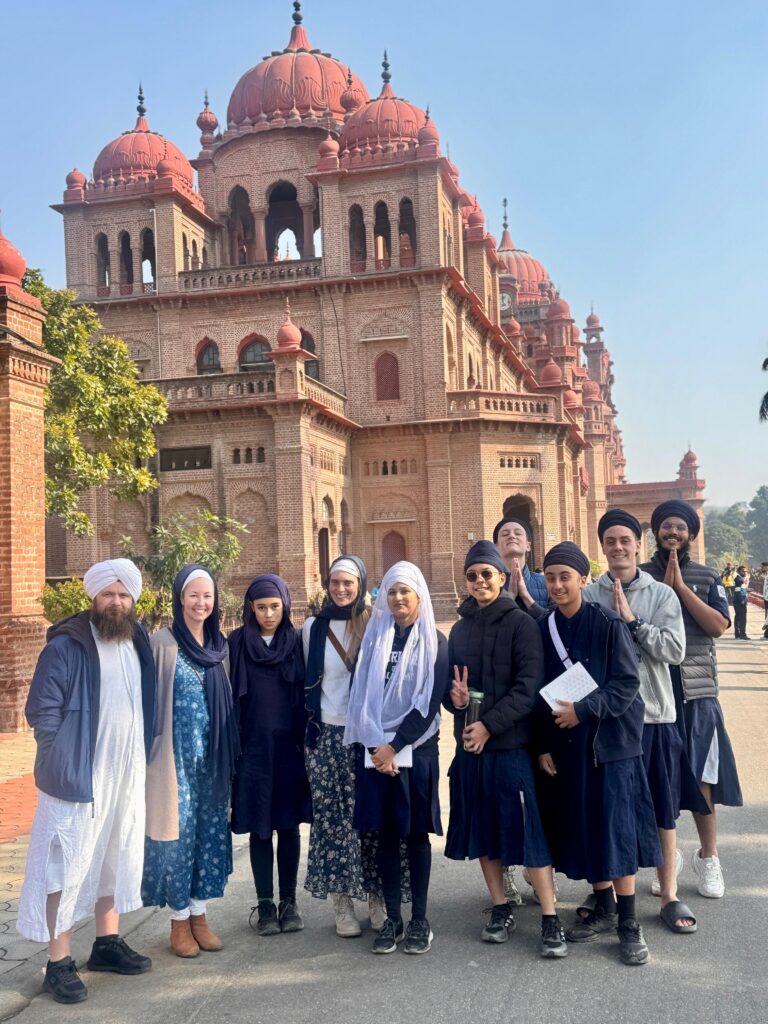
The class also explored Sikh manuscript traditions through a visit to Khalsa College, where students studied historic handwritten texts and decorative designs.
Khalsa College Visit
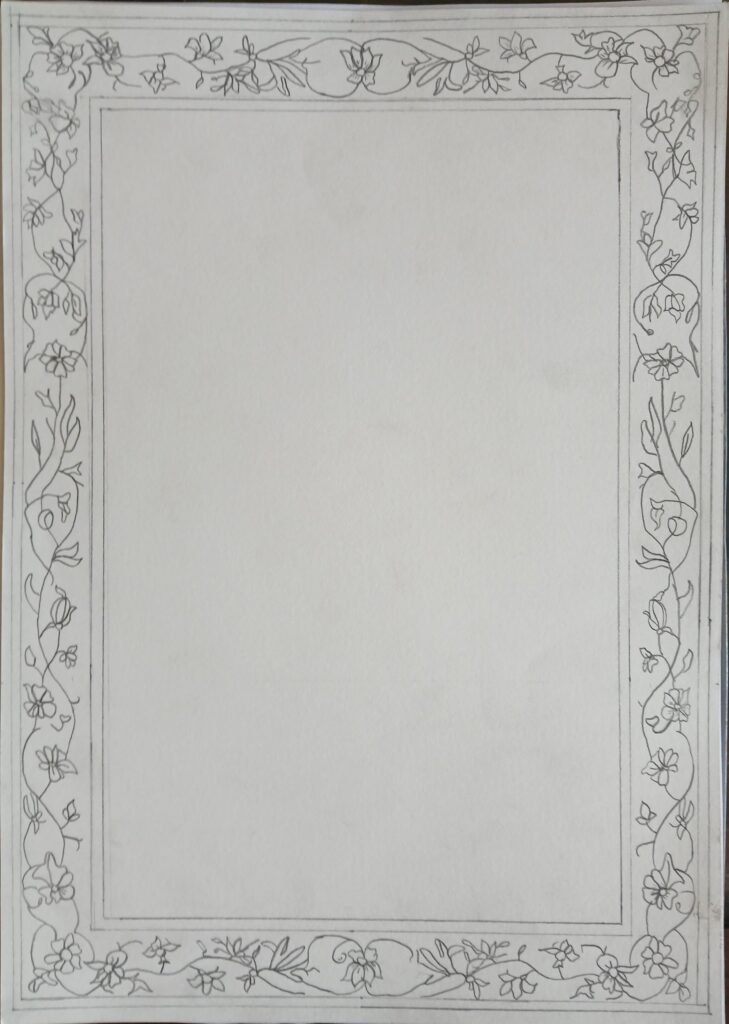
Inspired by these traditions, students experimented with floral borders, page composition, spacing, and handwritten layouts before assembling the final digital booklet.
One of the student’s mother also contributed by helping source ideas for the border design of the cover page.
Border Design Drafts
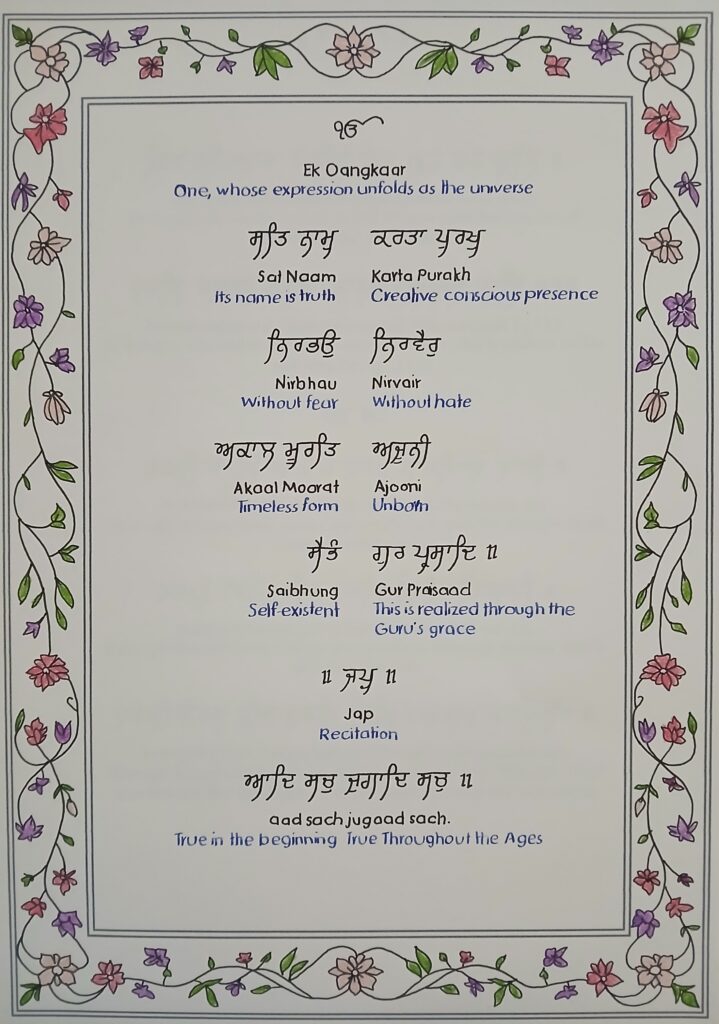
Final Booklet
The project demanded patience, concentration, artistic discipline, and sustained revision over many months. The final booklet is not presented as a perfect or authoritative translation, but as an honest student engagement with the depth, difficulty, and contemplative nature of Japji Sahib.