
Get Up, Stand Up: Is Empathy Enough?
This term, the Grade 8 learners participated in an interdisciplinary expedition titled Get Up, Stand Up. This learning journey encouraged students to think deeply about injustice and personal responsibility through the guiding question: When injustice occurs, is empathy enough? By connecting literature, history, and real-world issues, students were guided to reflect on whether understanding and sympathy alone can bring about meaningful change, or whether action is essential.
Exploring Injustice Through Literature and History
In English, students studied To Kill a Mockingbird, a novel that examines racial injustice, moral courage, and the consequences of remaining silent. Through close analysis of characters and events, learners explored how empathy without action can allow injustice to continue.
In History, students studied the Revolt of 1857, understanding it as an early resistance against colonial rule. Together, these subjects helped students recognise how injustice is challenged when individuals and communities choose to act rather than remain passive.
Learning Beyond the Classroom
To deepen their understanding, students visited Jallianwala Bagh, a place that stands as a powerful reminder of colonial violence and the dangers of unchecked authority. While engaging with this historical site, students explored the injustice inflicted on innocent civilians and reflected on how many leaders and citizens stood up against this brutality. The visit encouraged students to reflect on how fear, silence, and lack of action can lead to lasting consequences, making the guiding question more immediate and personal.
TED Style Talks: Student Voices on Injustice
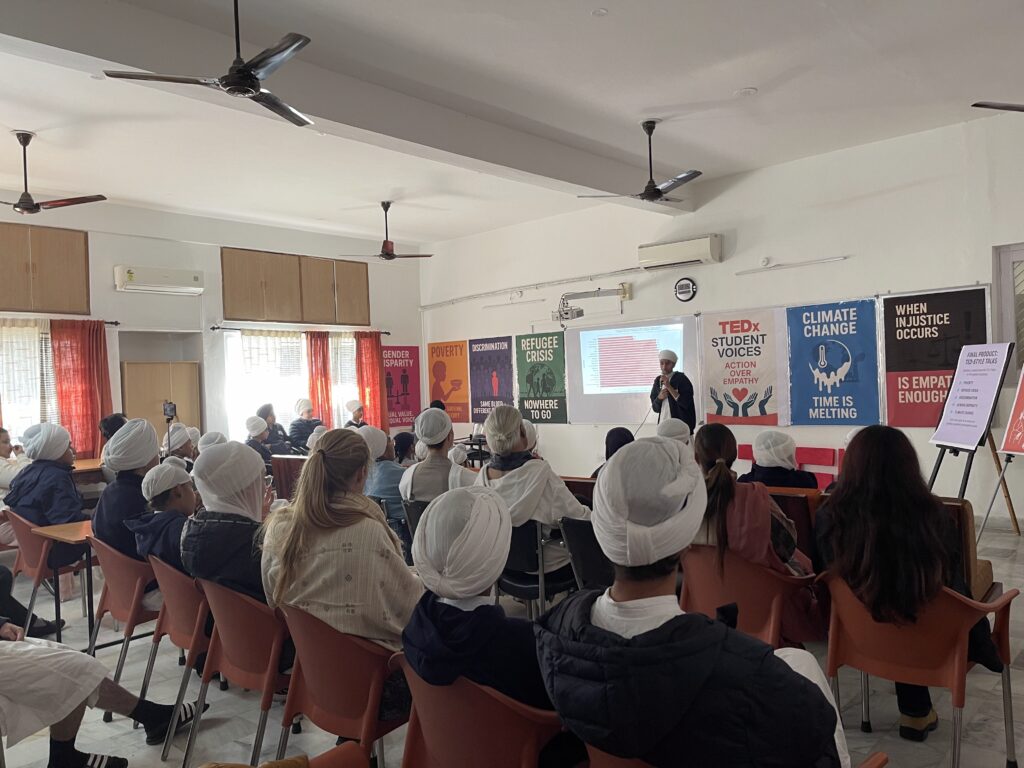
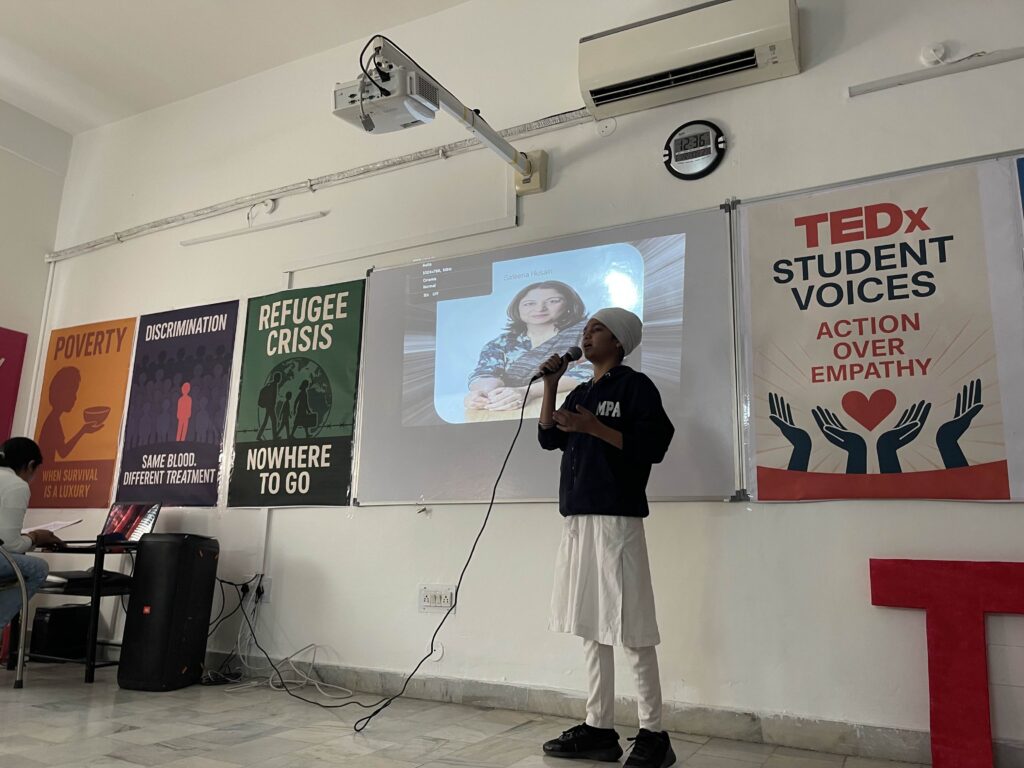
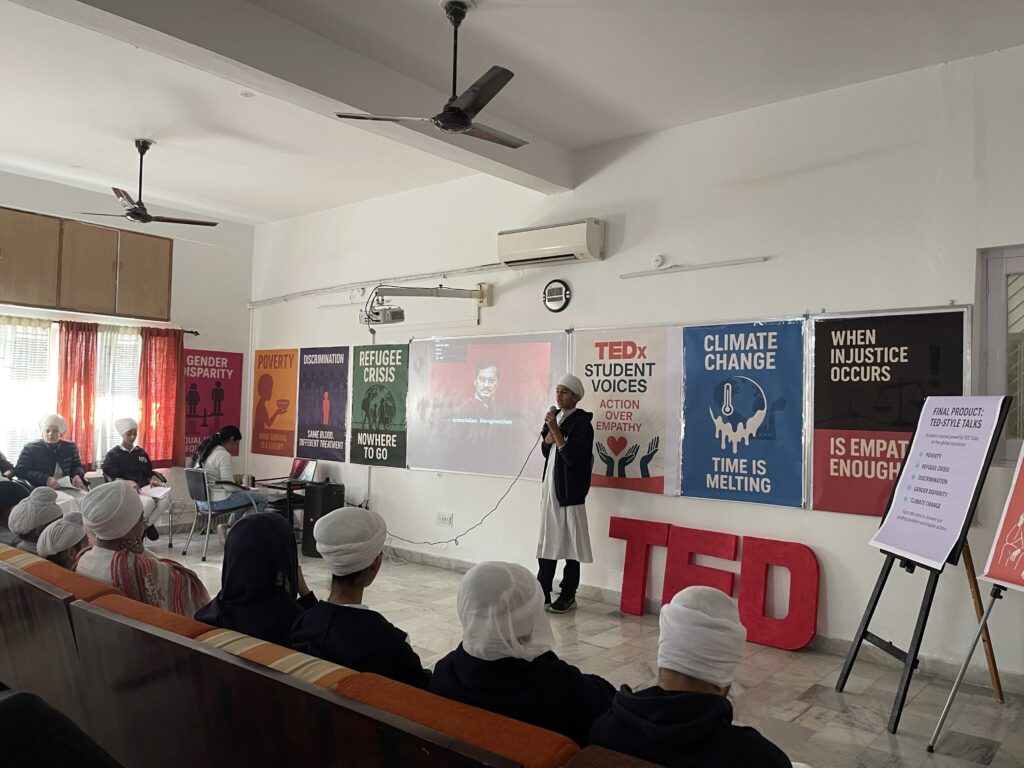
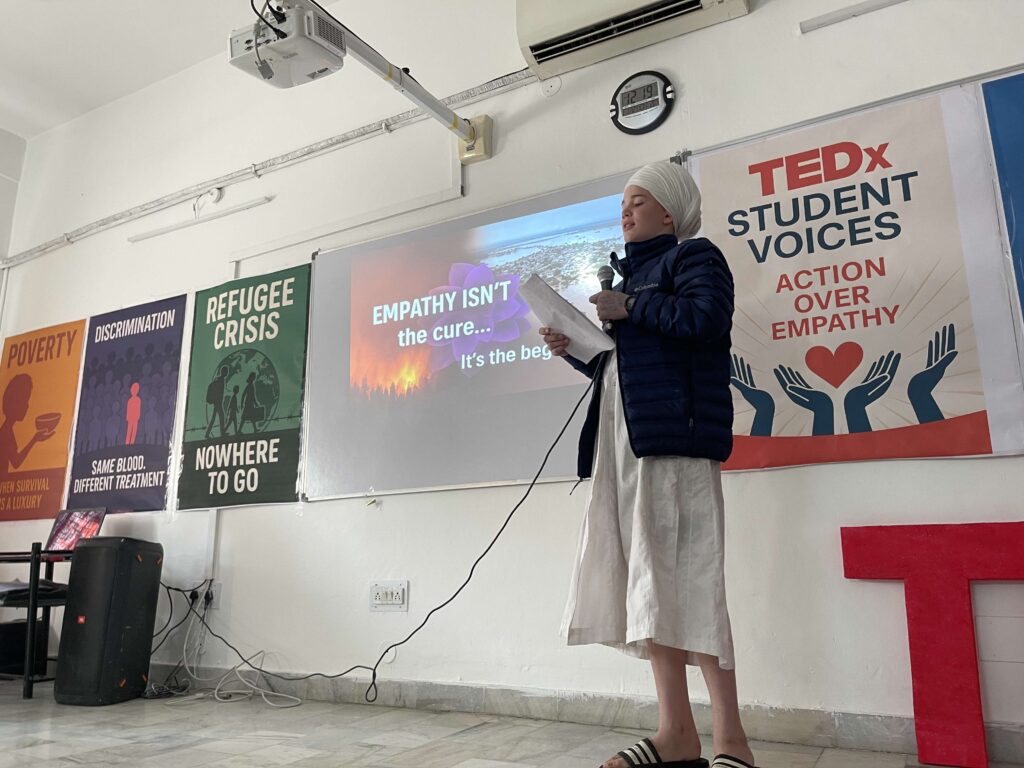
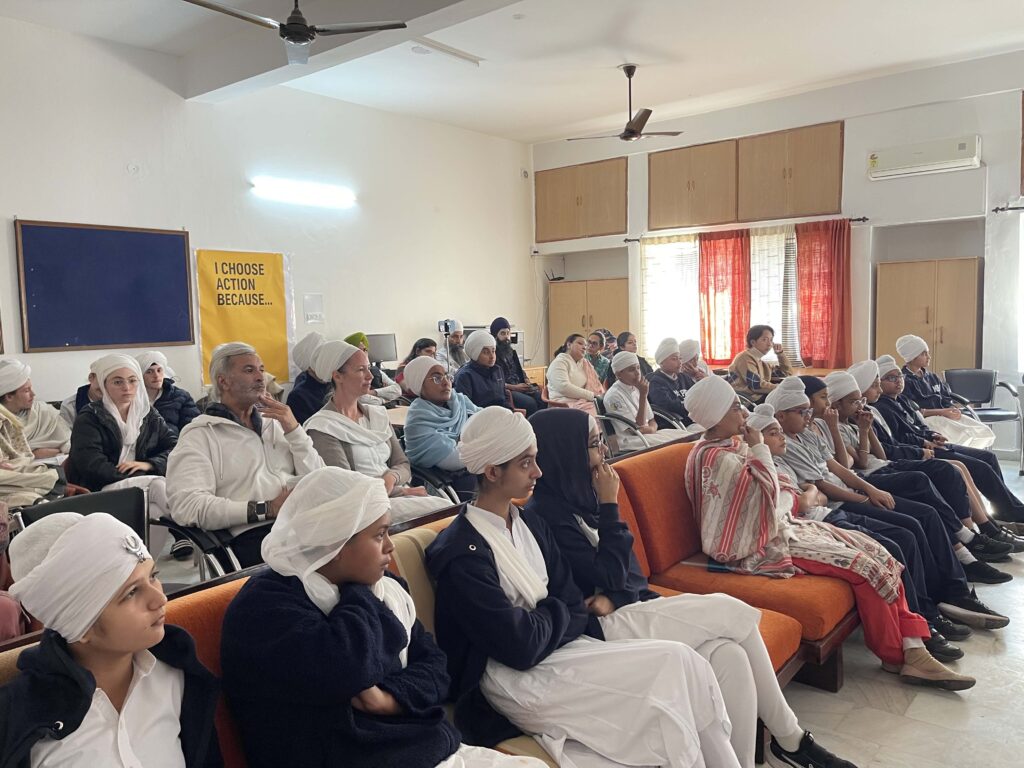
As the final product of the expedition, students presented TED style talks that addressed contemporary forms of injustice. Each student explored a different issue, using graphs, images, data, and real-world examples to show that while empathy is important, it is action that creates change. The session was confidently anchored by Ekamnoor, who introduced the theme, speakers, and purpose of the talks.
Jaisraj opened the talks by examining the global refugee crisis, questioning whether sympathy for displaced populations is meaningful without policy change and support. Navdeep addressed discrimination, exposing how deeply ingrained biases continue to marginalise communities despite widespread awareness. Jaisukhbir spoke about climate change, challenging the audience to consider whether concern alone can protect the planet without decisive action.
Ekampreet explored poverty, illustrating how structural inequality persists when empathy is not followed by intervention. Ekamnoor presented a thought-provoking talk on gender inequality, highlighting those who transformed empathy into advocacy and reform.
Across all talks, students highlighted people who moved beyond empathy and demonstrated the courage to act.
From Reflection to Responsibility
The session concluded with Ekampreet bringing together the key ideas and returning to the guiding question. To involve the audience, the expedition ended with a reflective activity where everyone responded to the prompt: “I choose action because…” Responses were shared on a common display, reinforcing the message that awareness must lead to responsibility.
A Meaningful Learning Journey
Get Up, Stand Up was not just about acquiring knowledge. It was about encouraging students to question, reflect, and recognise their role in responding to injustice. Through literature, history, discussion, and presentation, learners came to understand that while empathy is important, lasting change requires the courage to act.